Role
Product Designer
Team
3 Designers
Timeline
Jan - May 2023
Skills
UX Research
Interaction Design
Visual Design
Prototyping
Tools
Figma
Adobe Illustrator
Overview
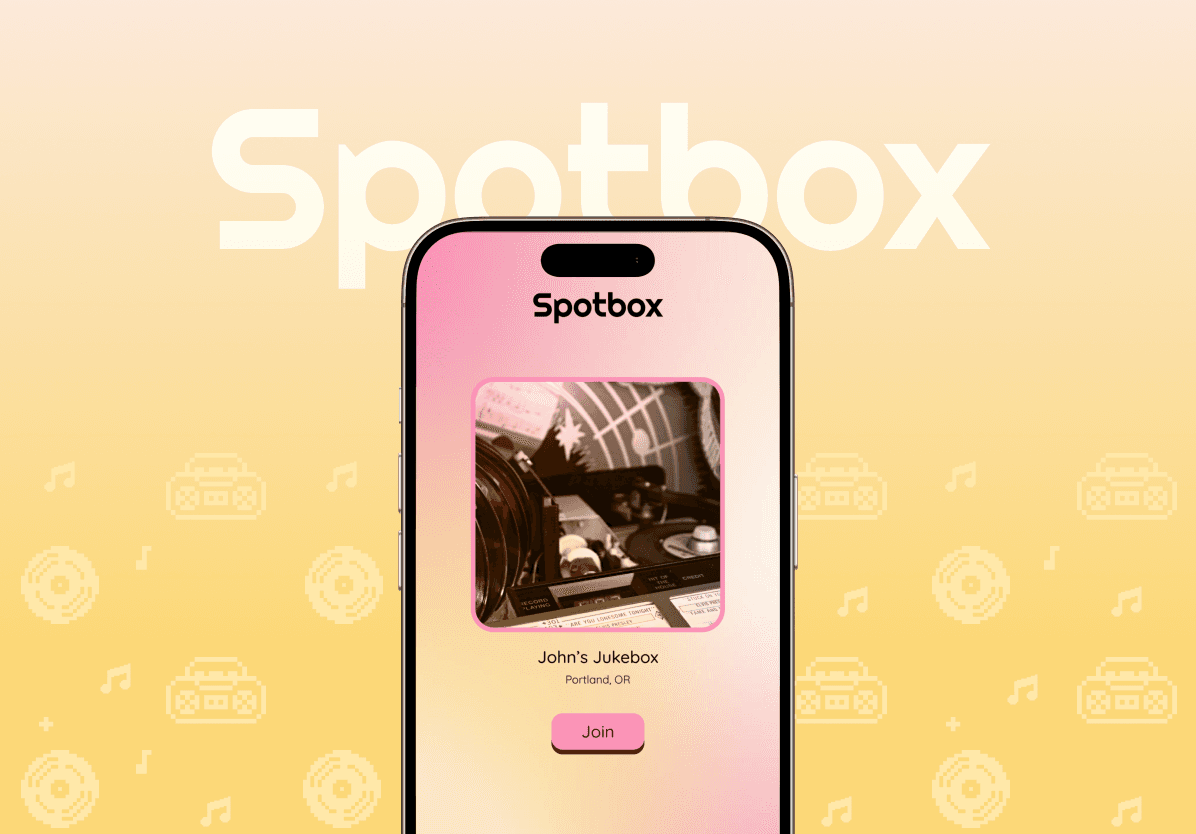
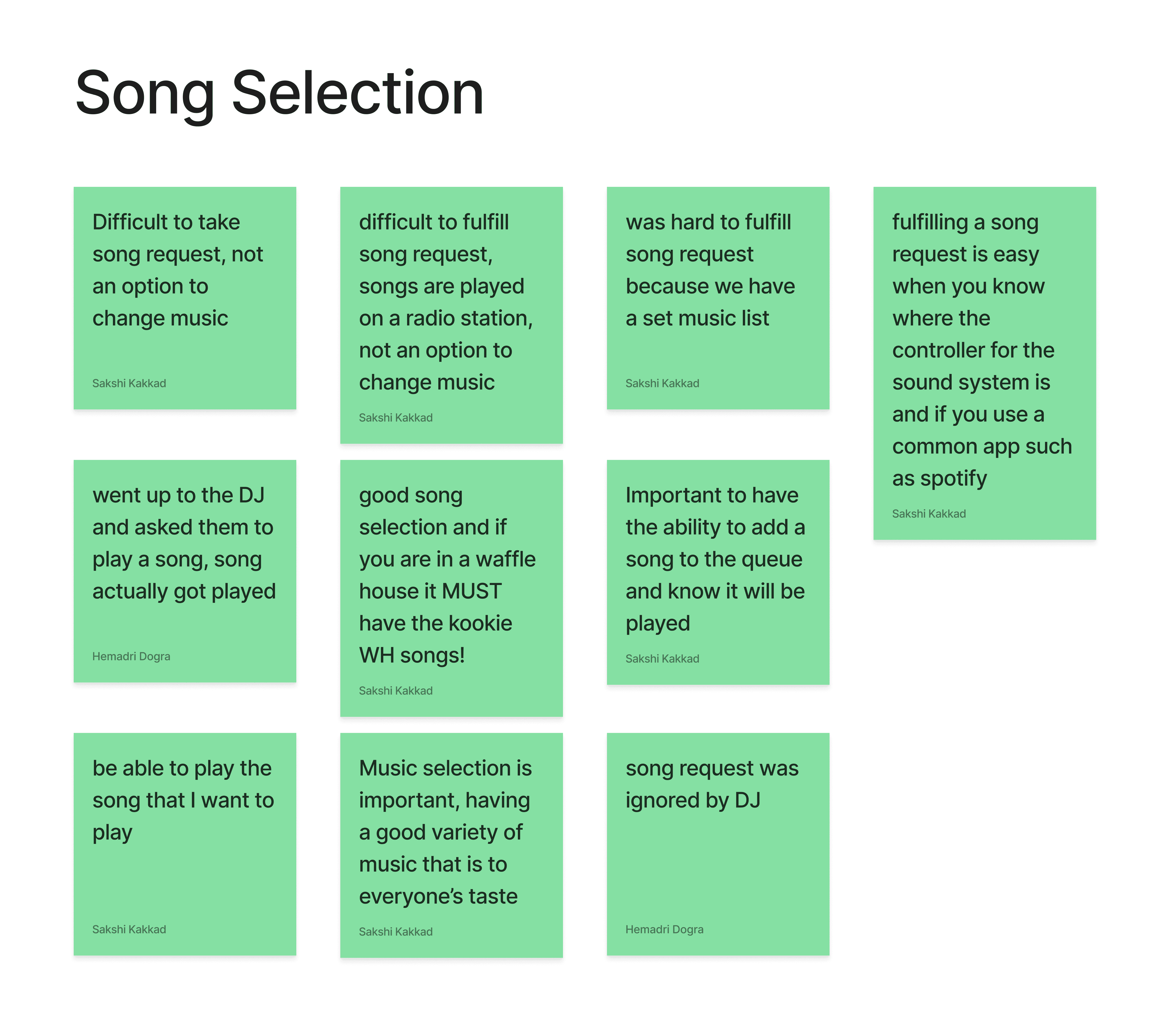
SpotBox is a Spotify-integrated digital jukebox designed to make shared music curation seamless in group settings. A team of three designers, including myself, was brought in to spearhead the user experience and visual identity, focusing on creating an interface that feels intuitive for both hosts and guests. The platform allows hosts to create sessions and share a code so guests can join, add songs to the queue, and vote tracks up or down to influence what plays next.
User Research
Research showed that access to healthcare in much of Sub-Saharan Africa is severely limited, with far fewer doctors per capita than recommended by the WHO. Existing telehealth solutions are sparse and often lack the scale, accessibility, or functionality seen in more developed regions. At the same time, emerging research around AI in telehealth highlighted opportunities to support diagnosis, triage, and care delivery in areas with limited medical infrastructure, informing the direction of the concept.
Telehealth in Sub-Saharan Africa is already possible and actively emerging. Expanding connectivity through technologies like Starlink, along with existing initiatives such as RD4A, ZimSmart Villages, and VakaAfya, demonstrates that remote healthcare delivery can work even in underserved regions. While these solutions are still limited compared to telehealth systems in more developed countries, they show clear proof of feasibility and highlight opportunities for more accessible, scalable care.

Ideation
Ideation began with creating a user persona to ground the concept in real needs and constraints. That persona directly informed a short, feasible feature list that could realistically be designed within the 48-hour Designathon timeline. From there, I sketched a rough flow of how the core features would connect, helping visualize the experience before moving into higher-fidelity designs.
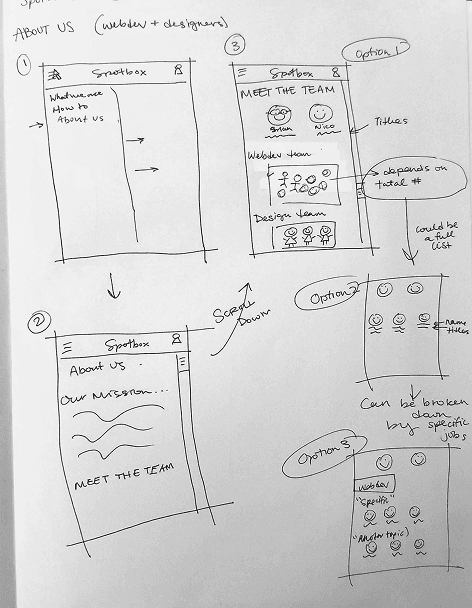
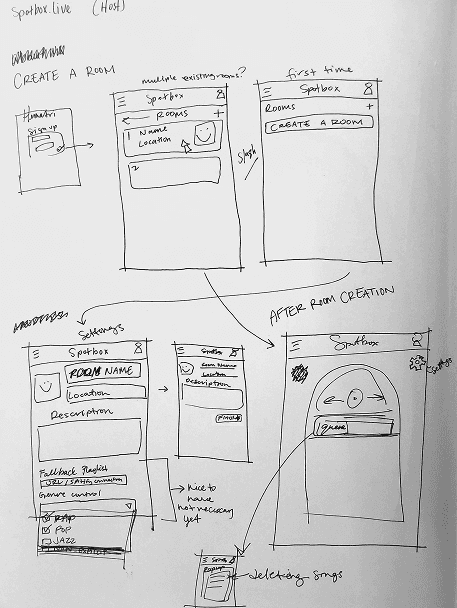
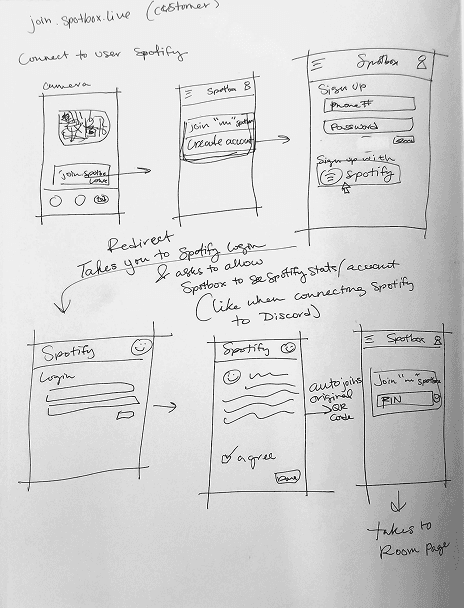
After sketching the initial flow, I narrowed the concept to what could realistically be designed within the Designathon timeline. I pivoted away from photo upload and the AI training pipeline, since those features required more technical detail than we could fully define at this stage. I also set aside the doctor-facing interface and focused entirely on the patient experience, prioritizing the core journey from symptom input to triage and next steps.
Final Design
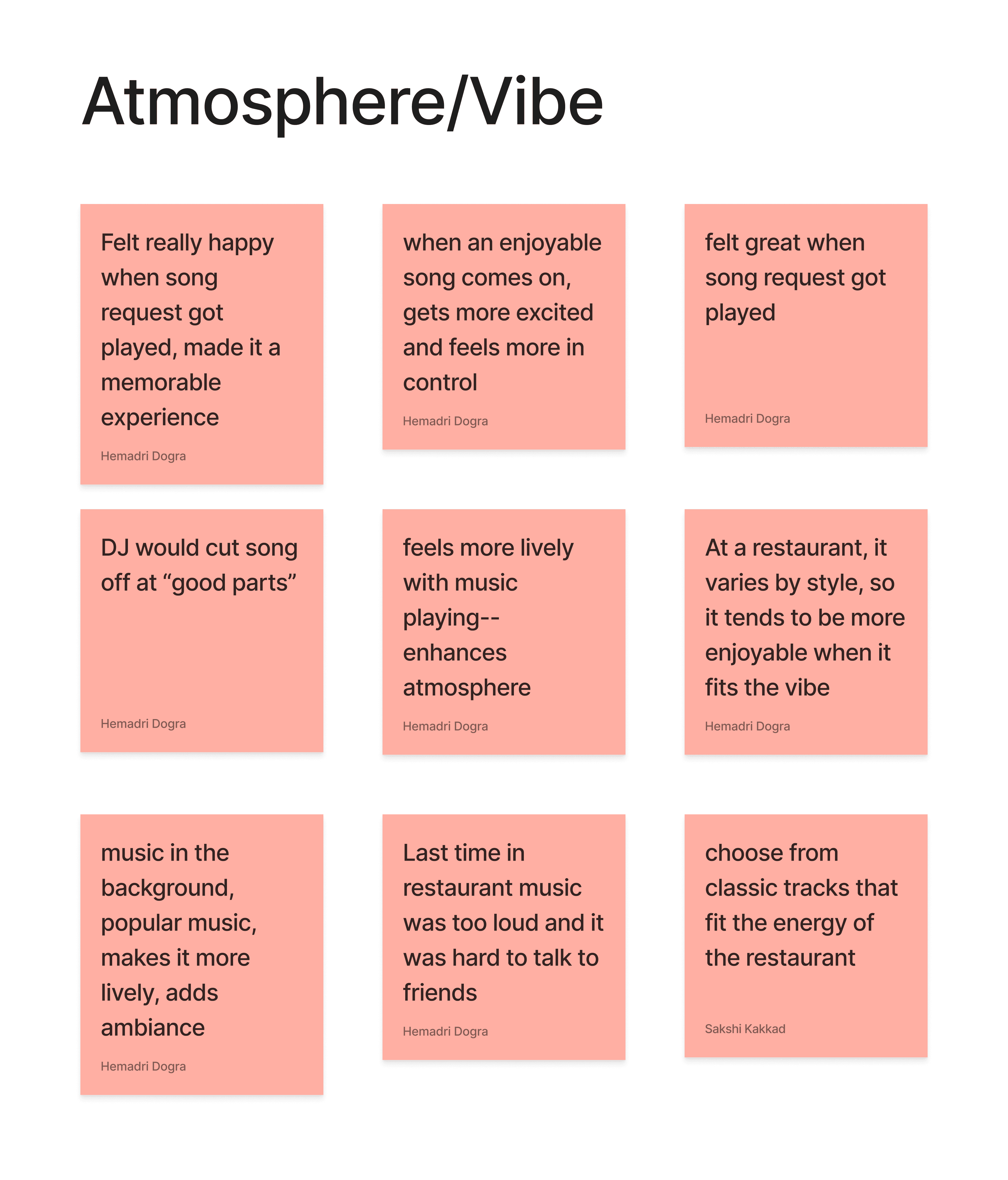
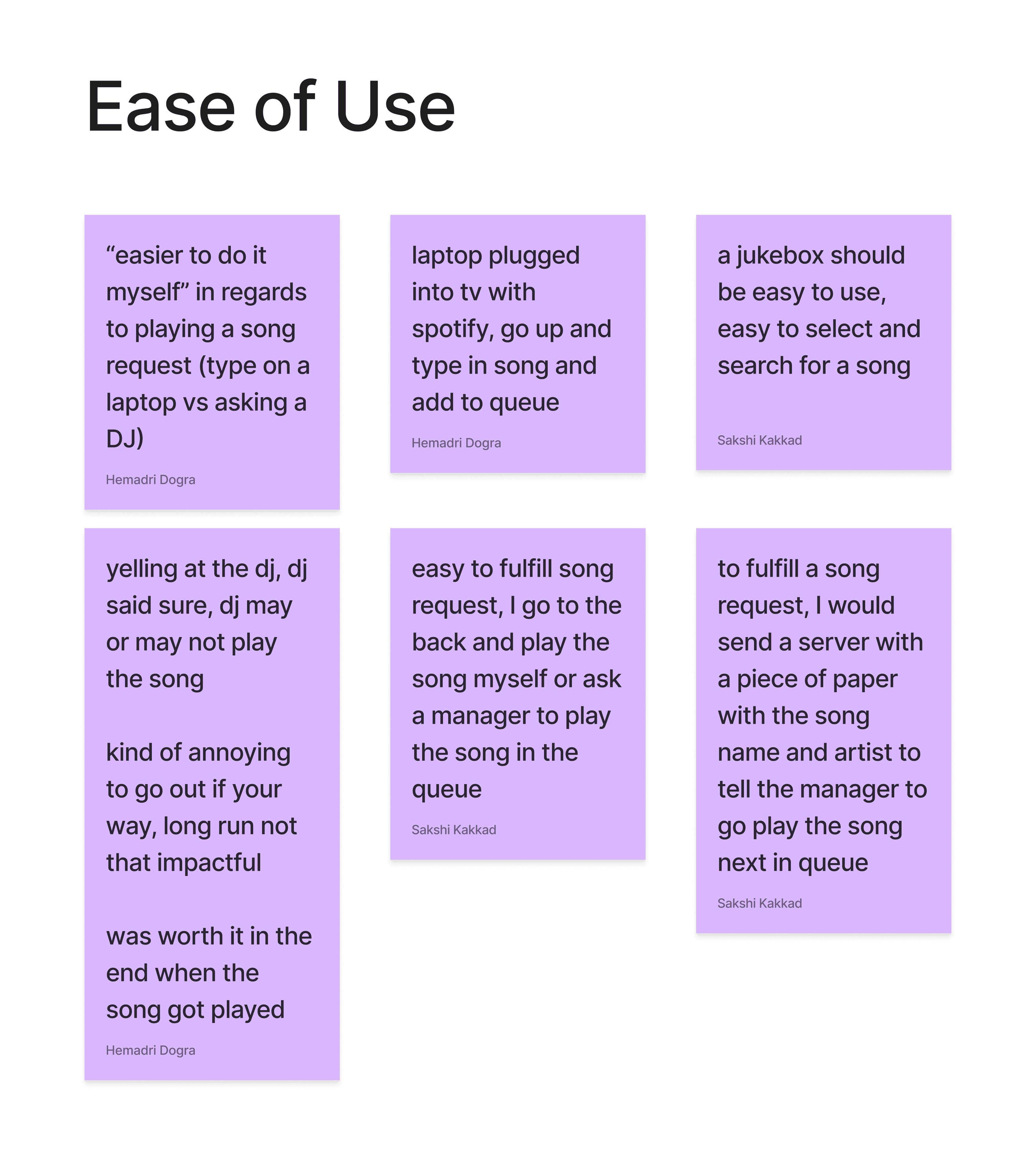
The guest experience was designed to be fast, intuitive, and low-commitment so anyone can participate in shaping the music. Entering a Spotbox code immediately reveals the live queue, making the system feel transparent and active. Adding songs and voting is limited to one upvote or downvote per track to keep the experience fair and prevent queue manipulation, while still giving guests a meaningful sense of control over the vibe.
The host flow focuses on flexibility and easy setup so creating a shared music experience feels seamless rather than technical. Linking Spotify ensures guests can search the full music library while also allowing the Spotbox to fall back on the host’s own music if participation slows. Hosts can create, edit, and toggle their Spotbox at any time, giving them control over when and how the collaborative queue is active without interrupting the event.
Reflection
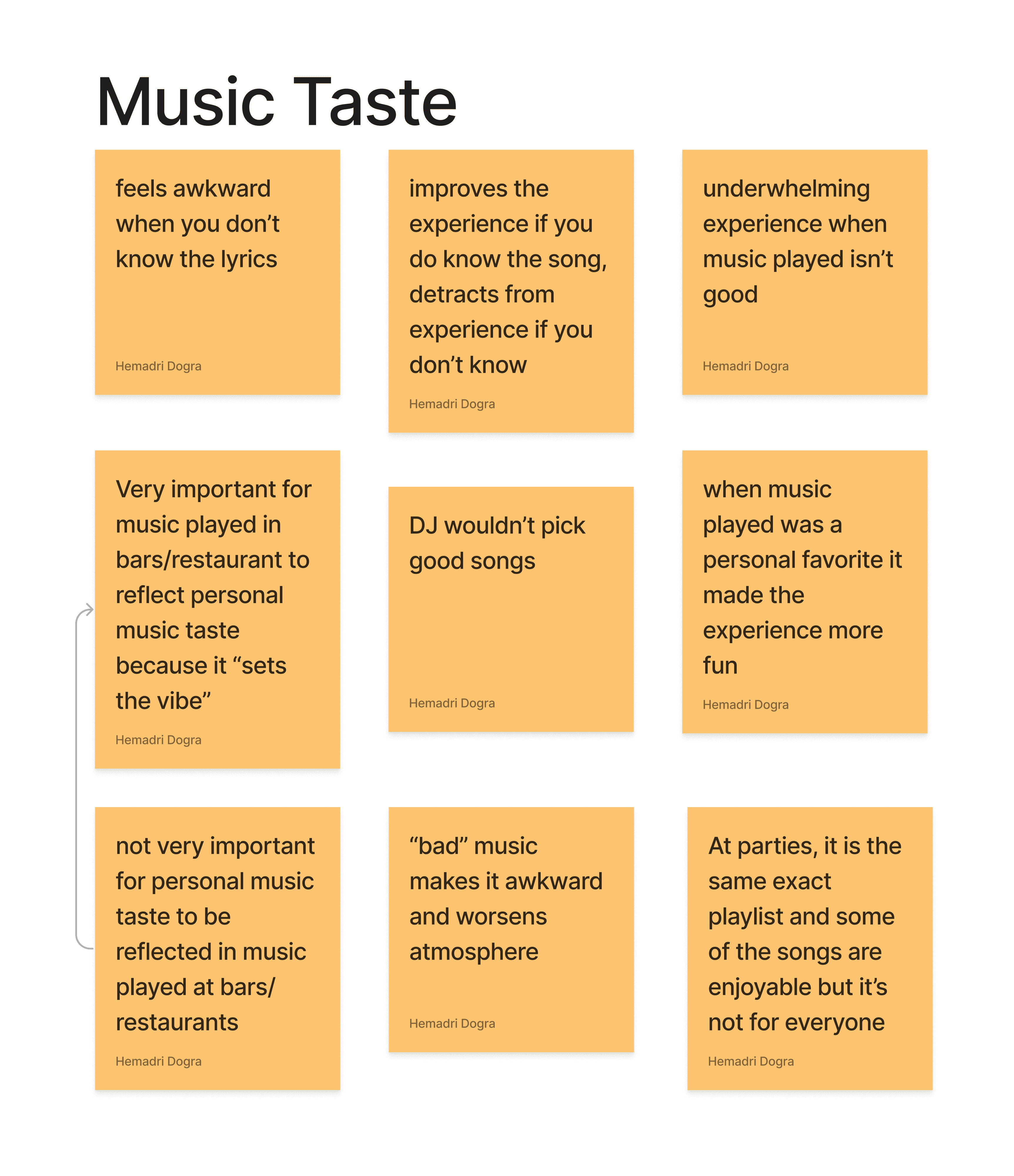
Spotbox is currently tailored toward personal gatherings, such as house parties or small events, but there is strong potential to expand it into commercial environments like restaurants, bars, and event venues. A future iteration could introduce a paid interaction model where guests spend a small amount to add songs or vote on tracks, mirroring the experience of a traditional jukebox while creating a sustainable system for hosts. The platform also limits each host to a single Spotbox, so allowing multiple Spotboxes per account would better support larger venues or different rooms within the same space. Additionally, refining moderation tools for hosts, such as greater control over voting weight or queue filtering, could help maintain the intended atmosphere across different settings. These improvements would help Spotbox evolve from a casual social tool into a more scalable, real-world product.